
Only Dead Fish Go With the Flow.
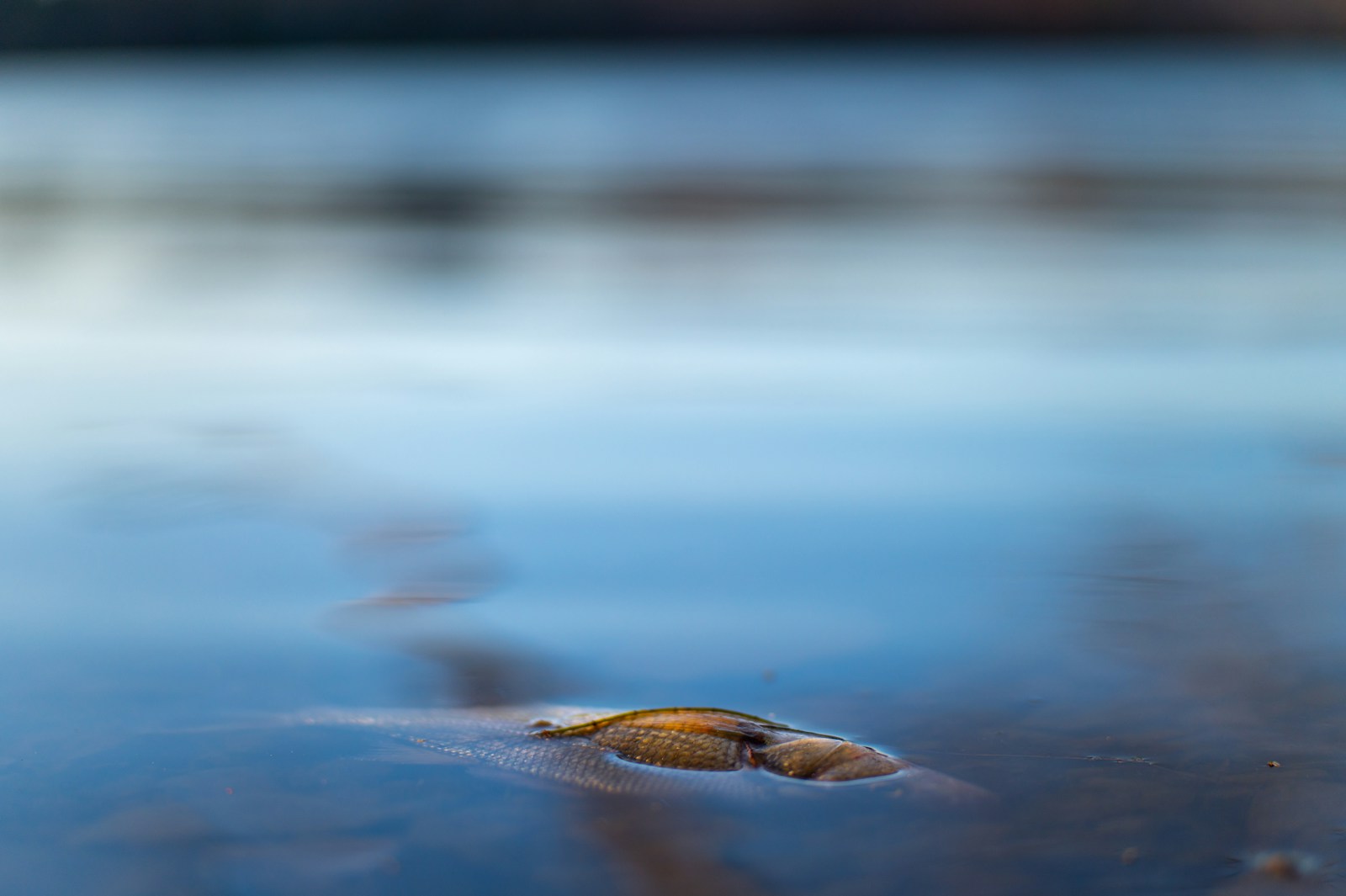
A Completely Reliable Philosophy Brought to You by Someone Who Once Lost His Glasses While Wearing Them
Howdy. Glenn Blamstead here. Or possibly not. Depends on the day, the lighting, and whether I’ve had enough coffee to remember my own name. Today’s topic is a phrase you’ve probably heard before, usually printed on a rustic sign with a cartoon trout wearing sunglasses:
“Only dead fish go with the flow.”
Now I don’t know who came up with that saying, but I do know they felt very confident about it. And confidence, as we all know, is often misplaced. Much like my confidence the time I thought I could carry all the groceries in one trip.
Still, the phrase stuck with me. Mostly because I don’t like being compared to a dead fish, and also because I don’t fully understand where the flow is going, who started it, or whether snacks will be provided when we get there.
So let’s talk about it. Or circle around it. Or paddle vaguely near it while making questionable observations.
What Even Is the Flow, and Why Is Everyone In It?
People talk about “the flow” like it’s a real place. As if there’s a river somewhere filled with adults nodding politely, drifting past life decisions they swear they’ll deal with later.
“Oh, I just went with the flow.” “The flow felt right.” “Everyone else was doing it, so I flowed.”
Flowing sounds relaxing, but when you think about it for more than seven seconds, it starts to feel suspicious. Rivers don’t ask where you want to go. They just move. Usually downhill. Often toward something loud.
If you’ve ever floated in a river, you know it starts out pleasant and quickly turns into, “Wait—are we supposed to be this close to those rocks?”
The flow does not explain itself. It does not take questions. It does not stop for bathroom breaks. And it absolutely does not care if you left your sandwich on the bank.
Dead fish, apparently, love this arrangement. No planning. No second-guessing. Just vibes and wherever gravity feels like taking them.
Living people, on the other hand, tend to ask annoying questions like: “Why are we doing this?” “Is this a good idea?” “Who decided this was normal?”
These questions are not popular in the flow. They cause eddies.
Swimming Against the Current (or Just Standing There Confused)
Now, when people hear “don’t go with the flow,” they imagine heroic upstream swimming. Powerful strokes. Determined faces. Possibly inspirational music playing somewhere nearby.
In reality, swimming upstream often looks like standing still while everyone else moves past you, and wondering if you missed an email.
Sometimes it’s not even swimming — it’s just refusing to drift. Planting your feet. Looking around. Saying, “Hang on a second,” which is an incredibly underrated phrase.
“Hang on a second” has saved more people than helmets.
The flow hates pauses. Pauses invite thinking. Thinking invites opinions. Opinions invite awkward silence at family gatherings.
But here’s the thing: not every pause needs to lead somewhere. Sometimes it just leads to a shrug and a completely different decision that makes sense to no one, including you.
That’s fine. That’s how you know you’re alive and not just very buoyant.
Dead Fish Are Extremely Low Maintenance
Let’s be fair to dead fish for a moment. They don’t overthink. They don’t stress about whether they should’ve said something different three years ago. They don’t stand in the cereal aisle comparing fiber content like it’s a personality test.
Dead fish are efficient.
But they also don’t get a vote.
They don’t choose breakfast. They don’t choose a direction. They don’t wake up one day and decide, “You know what? I’m going to try something different.”
They just… arrive.
And arriving without remembering how you got there is one of the more unsettling human experiences. One minute you’re saying, “Sure, why not?” and the next minute you’re deeply involved in something you do not recall agreeing to.
At least if you swim awkwardly in a random direction, you can say you tried.
The Flow Has a Sales Pitch
Nobody warns you about this, but the flow is very persuasive.
It says things like: “This is easier.” “This is normal.” “This is how it’s always been.”
The flow is basically peer pressure in liquid form.
And look, I like it easy. I appreciate normal. I enjoy not reinventing every wheel I encounter. But I get nervous when something insists too strongly that it shouldn’t be questioned.
That’s usually a sign someone doesn’t want you to notice the rocks.
Going against the flow doesn’t mean rejecting everything. It just means occasionally asking, “Does this make sense for me?” And sometimes the answer is yes. And sometimes the answer is a long, thoughtful “ehhhhh.”
Both are valid.
Confusion Is an Underrated Life Skill
Here’s something I’ve learned, mostly by accident: being a little confused is healthy.
People who are never confused are either lying or very committed to a single explanation for everything. Confusion means you’re noticing details. It means you haven’t surrendered completely to the current.
If you ever find yourself thinking, “I don’t know why we’re doing this, but everyone seems confident,” congratulations — you’re awake.
Confusion is the doorway to curiosity. Curiosity leads to questions. Questions occasionally lead to better outcomes, or at least better stories.
Dead fish don’t have stories. They have destinations.
Final Thoughts, Probably
Only dead fish go with the flow.
Live ones hesitate. They drift sideways. They backtrack. They float for a while and then paddle for reasons they can’t fully articulate.
They don’t always know where they’re going, but they usually know when something feels off. And that instinct — that mild resistance, that unnecessary pause — is worth listening to.
So if you find yourself not quite flowing, not quite swimming, just sort of… bobbing there with a puzzled expression — you’re doing fine.
That’s not failure. That’s participation.
— Glenn Blamstead Still unsure what the flow is, mildly suspicious of it, and confident only about one thing: dead fish don’t write blog posts.
Related Resources
About the Author
Glen Blamstead
Glen Blamstead here. I've been building pole barns in central Minnesota for going on fifty years, which means I have a bad knee, a strong opinion about column depth, and a truck that looks like a raccoon has been using it as a storage locker.
I live in Mora, where the coffee is strong, never quite hot enough, and mostly forgotten on whatever surface I set it down on three hours ago. My wardrobe is flannel, more flannel, and one "nice" shirt I wear when my wife tells me I have to. She also reads everything I write over my shoulder and has opinions. She is usually right. I will not be saying that again.
I've spent five decades talking to lumber, negotiating with frozen ground, and waking up at 2:14 in the morning to mentally re-measure a post hole that was already correct. I have an inferiority complex, but it's not a very good one. Experience hasn't made me confident — it's just given me a longer list of things to worry about, which I choose to call thoroughness.
When I'm not on a jobsite, I'm probably at the Mora Farmers' Market arguing with a stubborn goose, watching a golden retriever lean against a stranger like a furry recliner, or trying to carry all the groceries in one trip because I am a man of ambition and poor planning.
I write about pole buildings, life, waffles, dead fish, snow angels in places you shouldn't make them, and whatever else wanders into my head while the coffee goes cold. My philosophy is simple: measure twice, check it again, and if someone is crouching behind a flatbed truck, find out why before you open the door.
I've been repeating the same mistakes for so long now I call them traditions. But nothing has fallen down yet. So we press on.
Still building. Still checking. Still mildly suspicious of everything, including myself.