
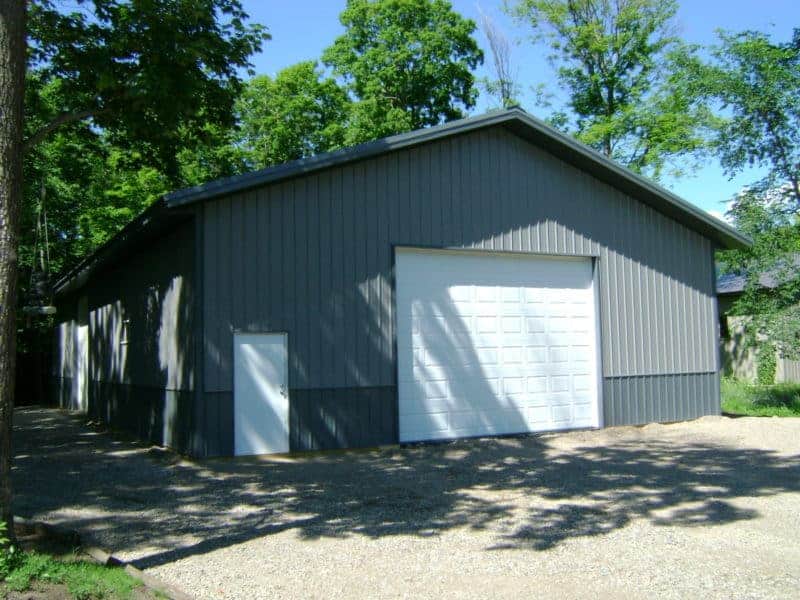
The 10 Perks of Constructing Pole Buildings
If you're looking to add an additional building to your property, pole buildings are a great option. Click here to learn about their perks.
So you're wanting to build a new garage, barn, or workshop but the quote you got for that stick frame building was a bit ridiculous. Why aren't you considering a post frame building?
Pole buildings have many benefits to both the building process and usefulness. Not sure if a post frame structure is right for your needs?
Keep reading for 10 benefits of choosing a pole building.
1. Faster Construction Time
Pole buildings can be constructed much faster than other construction methods because they require fewer materials. This means there are fewer parts that you have to put together.
Fewer components mean a faster build. This is especially true since you don't need to have a foundation poured and cured.
2. Lower Construction Costs
That concrete foundation also adds up when it comes to the cost of your building construction. With a pole building, you don't have a foundation like you would with a stick frame building.
The average foundation accounts for about 10.8% of the total construction cost. So when you have a pole building you can expect to save a good amount of this cost.
3. Larger Doorways and Openings
A building needs to have the support in place to maintain a wide opening for a door or window. These requirements are outlined in the building codes for your area. You'll notice that pole buildings can have much larger openings and still be in compliance with the building codes.
This is something to keep in mind if you intend to use your pole building for agricultural use or to store large equipment.
4. No Interior Walls
A pole building doesn't require you to build any interior load-bearing walls. This cannot be said for stick frame buildings.
You can leave your building wide open for a large workspace, for example, or you can create different areas by building out the interior with space separating walls.
If you ever decide to change the layout of the space inside your building, you'll have total freedom. You don't have this with stick frame structures, which means for a more complicated remodel.
5. Stronger Structure
Here in Mora, MN we get an average of 46 inches of annual snowfall. Freshly fallen snow that is 10 to 12 inches deep has about 5 pounds per square inch of weight.
That is equal to about 1 inch of water. However, it only takes 3 to 5 inches of old packed snow to create the same amount of weight.
So if the old snow on your roof gets to be about 2 feet, this would be a cause of concern. This equals about 60 pounds per square inch of pressure on your roof.
Even though a pole barn requires less wood and material, they have a stronger structure to support the weight of the snow. This is because of the way the building transfers the weight from the roof through the trusses, down the poles, and into the earth.
6. Versatility
You might be able to tell from the benefits we've spoken about so far, that your pole building is highly versatile. a few common uses are as garages for boats, tractors, and recreational vehicles, or agricultural barns or warehouses for inventory.
These aren't the only uses though. A pole building can be erected to look like another beautiful home on the block. Or you could build a workshop, home gym, home office, photo studio, or even a dog kennel.
7. At One with the Earth
Instead of having a concrete foundation, the earth is what provides support for the building. The main support poles are designed to resist decades or abuse from the wind, rain, and snow.
By design, these poles transfer the force of the wind and the weight of the snow down into the earth. The larger the poles and deeper you set them, the stronger your building will be through the transfer of stress into the surrounding ground.
8. Freedom to Build Anywhere
A conventional building would require you to grade the ground to level it, making it ready for the concrete foundation pouring. This is not needed if you build a pole barn.
This lets you build on terrain that wouldn't work for a conventional structure. Because of this, you'll have less cost and time expense in the preparation of the land for your building.
9. Insulate with Ease
Without insulation, your building's temperature will fluctuate with the seasons. To address this you can insulate. This is much easier with a pole building where the space between the poles is much larger than the studs on a conventional stick frame building.
With pole buildings, you'll move much faster around the building with the wider spaces. You also have the freedom of choosing what type of insulation you want to use, rolled batts, spray in foam, or loose fill.
10. Easy to Finish the Interior
Completing the finished interior of your building accounts for the largest of your construction costs at 28.6%. If you plan on using your pole building as a barn, shed, or storage structure then you won't need to do any work in finishing the interior.
But what if you want to use it as your home or man cave? The first thing you'll do is insulate. This is easy thanks to the wide spacing that you don't get with stick frame structures.
You'll unroll blanket insulation and cut it to length. The goal is for you to fill all of the gaps. Then you'll spread insulating plastic over the insulation and secure it in place.
For many pole buildings, this is all you need to do. If you want a more finished look, hang drywall over the plastic.
Pole buildings are rarely taped or textured. But there is nothing stopping you if you want to do it to yours!
Pole Buildings Are Perfect for Your Next Project
With all of these benefits, why aren't you considering a post frame building for your next construction project? These buildings will save you time, money, and effort.
Pole buildings use less wood and don't require you to build a concrete foundation for support. Because of this, you're using the strength of the earth to maintain your building.
You can expect your new building to provide you with years of use and shelter against the Minnesota seasons. Contact us today and we can give you a quote for your next pole building.
Frequently Asked Questions
Why does post-frame usually cost less than stick framing?
Fewer, larger structural members carrying load to fewer footings. Columns spaced 8 to 12 feet on center replace studs at 16 or 24 inches, and the building generally does not need a continuous foundation wall, which removes a significant concrete and excavation cost.
Are post-frame buildings only for agricultural use?
No. The method is defined structurally rather than by use. ANSI/ASABE S618 describes a post-frame building system as one whose primary structural frames use wood posts as columns supporting trusses or rafters, and the method is used for homes, shops, retail and commercial buildings. Note separately that {AGEX}.
Can a post-frame building be finished inside like a house?
Yes. Widely spaced columns and clear span trusses make the interior layout flexible, because interior walls are generally not load bearing and can be placed or moved without touching the structure.
How does post-frame perform in high wind?
Buildings in Minnesota are engineered to an ultimate design wind speed of 115 mph for Risk Category II. Columns embedded in the ground develop resistance along their depth, which is part of why the system performs well under wind and uplift.